Project: iMamma
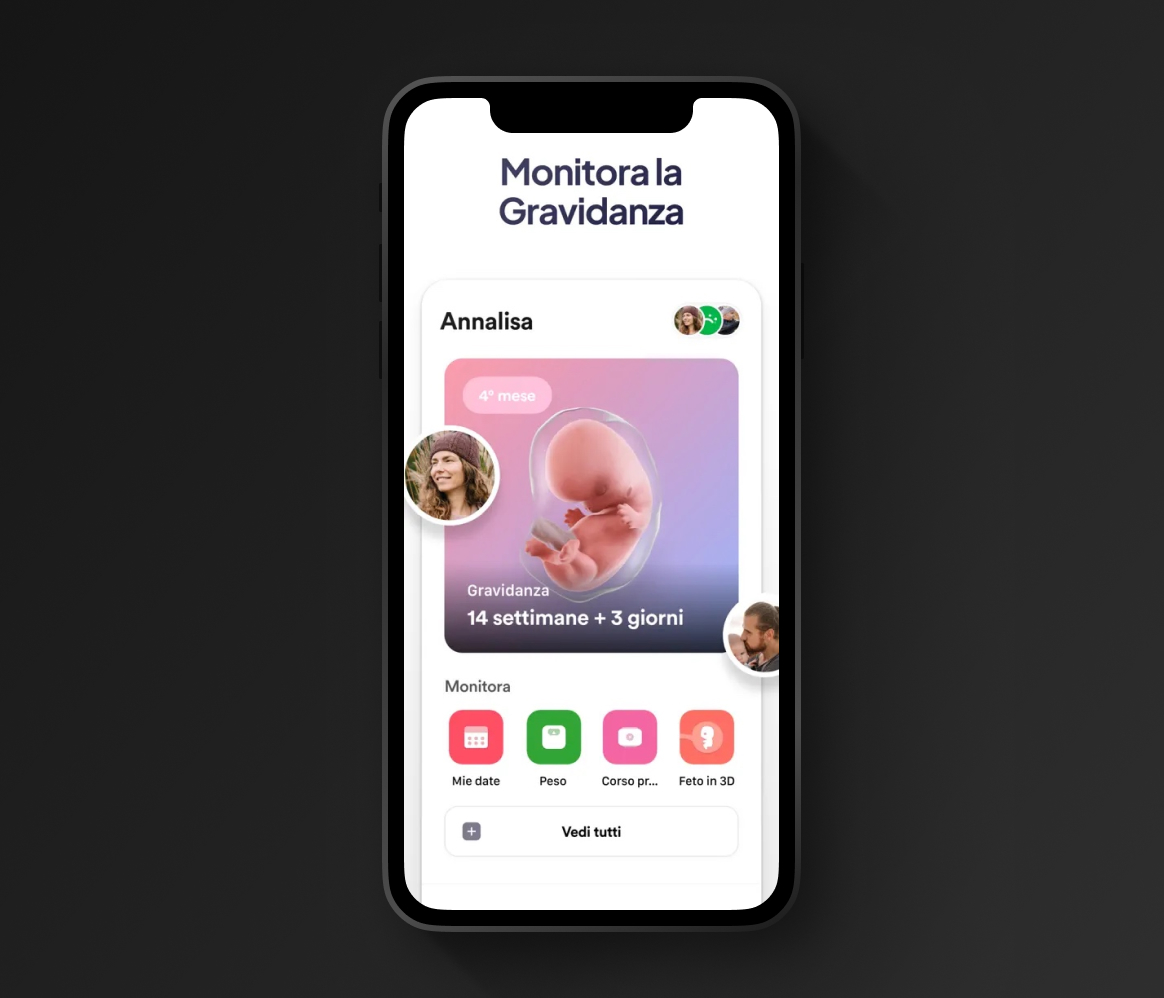
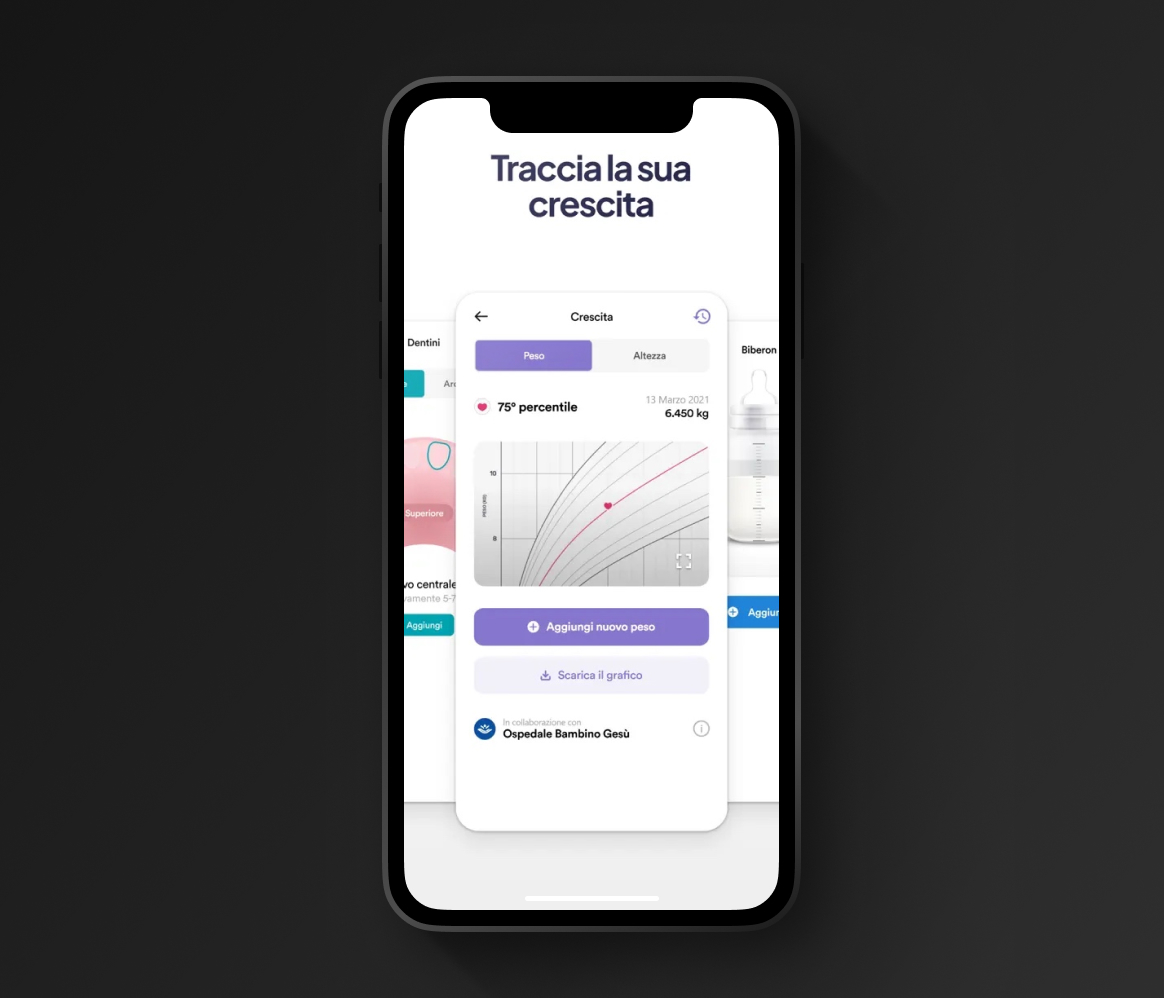
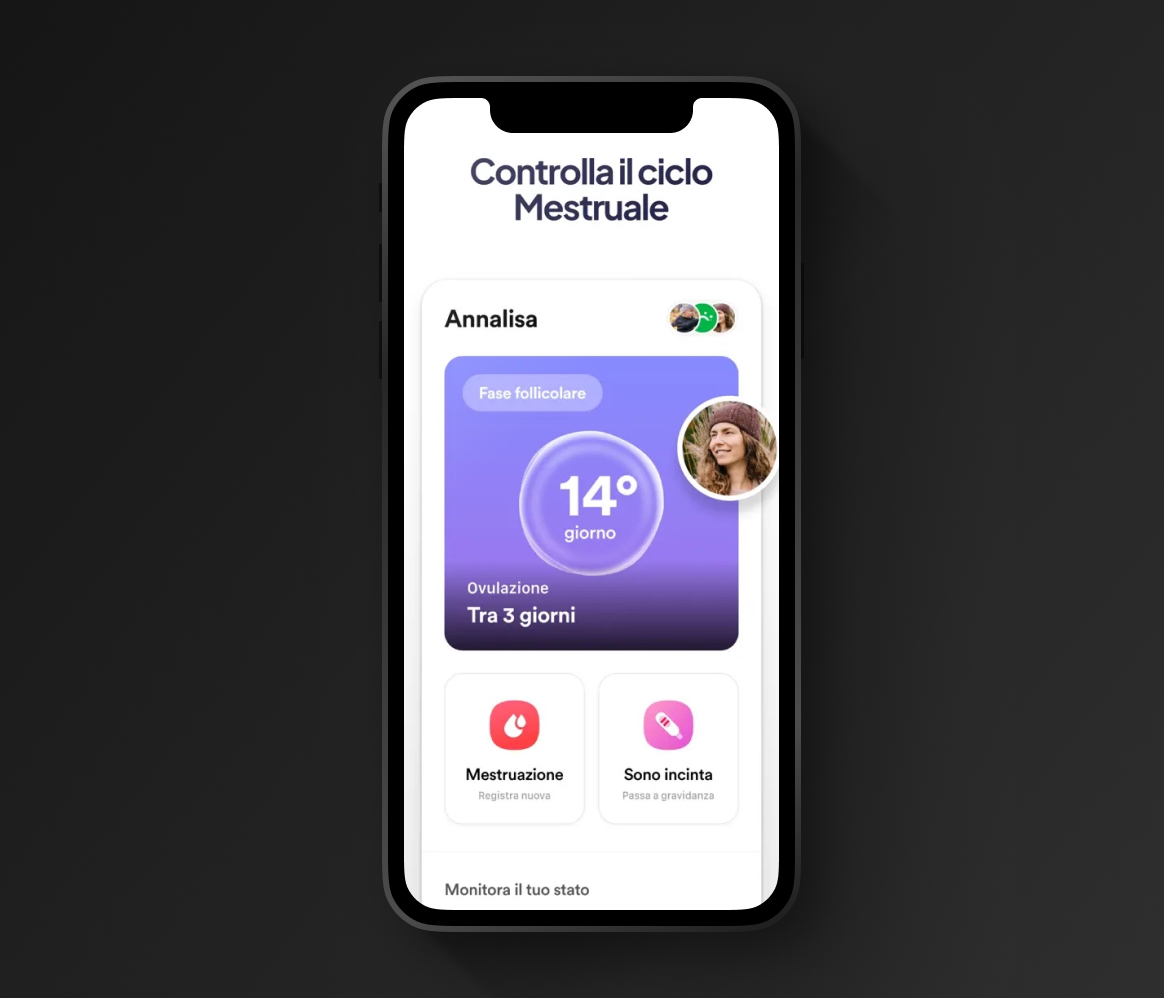
2020 – PresentiMamma is one of Italy’s leading maternity and parenting apps, with over 1M users and a 4.7-star App Store rating. The product is built on a Kotlin Multiplatform architecture: domain logic, networking, persistence, sync, and MVI state machines live in shared Kotlin (compiled to an XCFramework and owned by the Android team), while the iOS app is a thin native layer on top.
My role was on the iOS side. I built the SwiftUI presentation layer and the bridge to the shared MVI components, observing Kotlin-exposed state Flows through SwiftUI and dispatching user actions back as Intents.
I worked on a generic UIHostingController wrapper and a routing layer mapping shared routes to SwiftUI screens, and delivered features across the app’s trackers (sleep, feeding, nutrition) and Tools section. I made the project fully reproducible via XcodeGen and a Makefile, and integrated the AppsFlyer SDK for attribution and deep linking, including ATT consent handling.
Project: Eolo
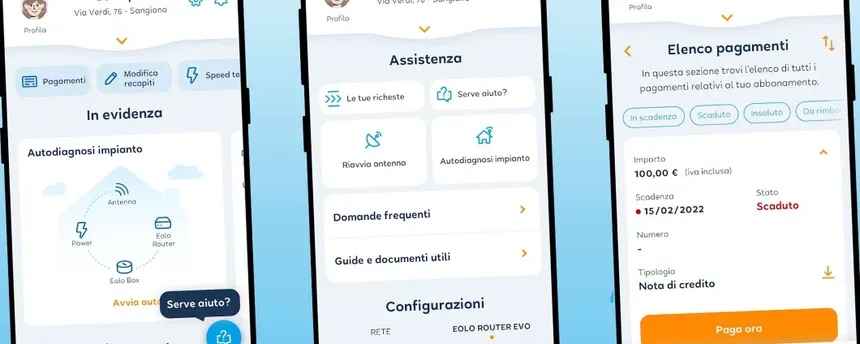
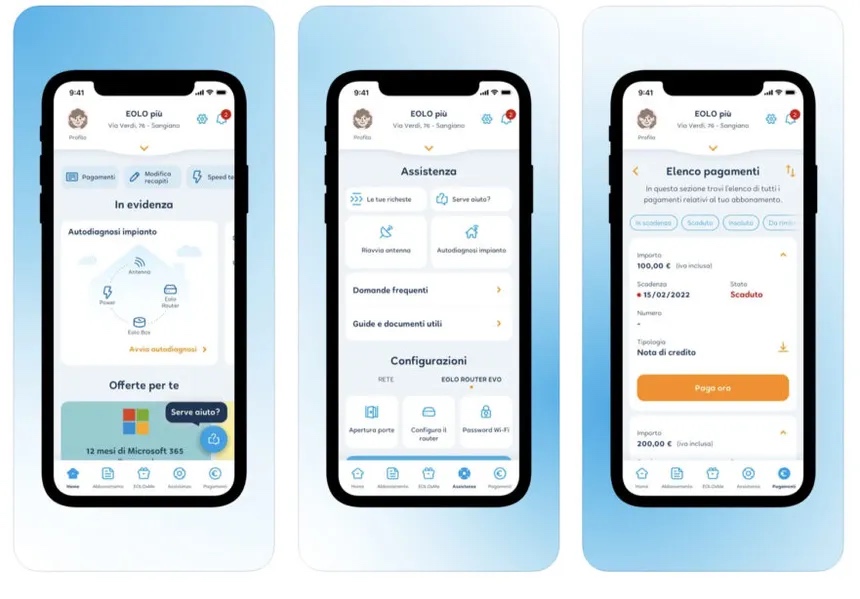
2023 – PresentNative iOS application for Eolo, an Italian fixed-wireless broadband (FWA) provider, serving as the customer-facing companion app for account management, connectivity diagnostics, and payments. The project originated from a previous development effort at another consulting firm. The client wanted to retain the existing codebase and integrate and add new features to it.
Tech stack & architecture:
- Swift 5 with a hybrid SwiftUI + UIKit codebase, using a StackableViewBaseViewModel component architecture for reusable, composable screens.
- Tuist for project generation across 7 build schemes (Dev / QA / Production / Store / Mock / Preview), each with isolated bundle IDs, entitlements, and Firebase configs.
- CocoaPods + SPM for dependencies; Natrium for per-scheme environment configuration (OAuth credentials, endpoints, feature flags).
- Protocol-based dependency injection with abstraction wrappers around third-party SDKs.
Key contributions:
- I’ve modernized some legacy code introducing SwiftUI, Tuist for project generation and SPM.
- Recharge flow for QuandoVuoi & QuandoVuoiMax contracts: developed the dedicated recharge feature module for prepaid “QuandoVuoi” and “QuandoVuoiMax” plans, handling contract-specific recharge endpoints and the full UI flow from plan selection to payment confirmation.
- Connectivity self-diagnosis (Autodiagnosi): built the end-to-end flow that runs a remote connectivity check on the user’s line, triggered from in-app navigation, push notifications, pull notifications, and universal/deep links.
- Payments (Nexi S2S): integrated the Nexi XPay server-to-server recharge flow (wireless & QuandoVuoi recharges), including a two-stage create → SDK-form → status-polling pipeline, and resolved an Alamofire serialization edge case where HTTP 201 with an empty body failed parsing.
- Consent & analytics (Google Consent Mode): shipped the GCM bridge connecting OneTrust consent state to Firebase/GA4, mapping consent categories to analytics/ad storage signals.
Build & release engineering:
- Firebase distribution via Fastlane lanes for QA and Production, with Crashlytics dSYM upload automation.
- Git workflow managed through BuddyFlow, a custom Ruby CLI that I developed to enforce branch naming, merge strategies, and Firebase test-area automation.
[POC] Indie: Rosanero
2026 – PresentSometimes I use my proof-of-concept projects as a training ground and lab to experiment with and implement the latest Apple technologies. This POC aims to explore the possibility of creating an unofficial fan app for the Palermo F.C. soccer team that is entirely native and can take full advantage of the capabilities offered by iPhone hardware.
The idea, therefore, is to create a native app for high-end iPhones that makes extensive use of graphic effects and animations in both SwiftUI and Metal. Fans will be able to follow their team through a premium experience that includes gamification with geotagged tags, AR, and extensive use of artificial intelligence—which, through RAG, summarizes all the news on the web about the team and the transfer market.
One of the sections will be dedicated to community engagement. A proof of concept (POC) for the community section is available below among the links.
Project: SnapFood
2018A food guide based on the community’s experience, that focuses on dishes and not on restaurants. Available on iOS and Android, SnapFood does not just tell you where to eat, but where you can eat the best dish you’re looking for.
Tech stack:
- Debugging with Crashlytics
- Autolayout
- Realm DB
- Share Extensions
- Cocoapods
- Alamofire
- Moya
Research: Vuforia SDK AR
2015Some experiments conducted way back in 2015, when Apple did not yet have its own augmented reality library but there were some third-party libraries that made it possible to create the first AR prototypes.
In the first video, I demonstrated, during my time at Informamuse—a proof of concept (POC) showing how, in 2015, it was possible to create AR products using the VuforiaSDK library. Specifically, the POC showcased a potential feature for a museum app in which visitors, upon approaching an exhibited archaeological artifact, could see what that artifact looked like when intact and viewable from every angle thanks to Augmented Reality.
In the second video, a similar POC but performed on 3D models.
This demonstrates my general inclination to continually experiment with new technologies.
Research: Watson SDK AI
2016Some experiments conducted way back in 2016 when Apple did not yet have its own AI frameworks but there were some third-party libraries that made it possible to create the first AI prototypes. It wasn’t yet the era of LLMs and AI was limited to machine learning and OCR scanning.
The first video is about IBM Watson AI. The second video is about Vuforia SDK and IBM Watson AI. The third video is about PBR with a fresh new Apple Framework presented at wwdc 2014: The Metal Framework